A Laundry Shelf for Small Supplies and Fewer Lost Socks
Organize detergent, care accessories and loose items around the point where you use them, without crowding the washer or losing product directions.
Our guidance is based on published information and household scenarios, rather than hands-on product testing. Some links may earn a commission when an affiliate relationship applies. Read our disclosure.

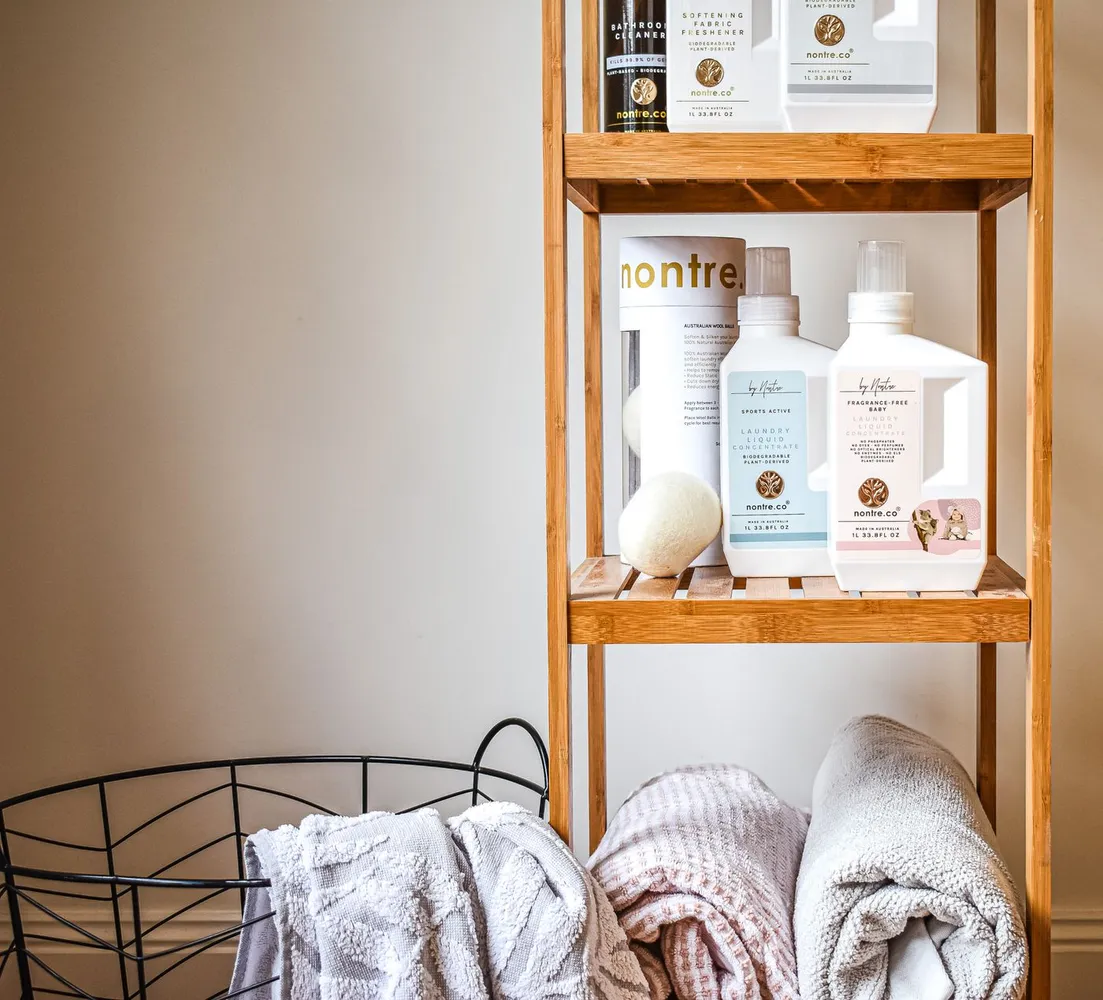
Lifestyle photography by Atlantic Ambience / Pexels. The photograph illustrates a home setting; it does not identify a reviewed product.
A coin discovered in a pocket and a sock waiting for its pair need different destinations from detergent and stain care products. Without those destinations, the washer top quickly becomes a mixture of small objects and bottles. A simple supply shelf works when it preserves instructions, keeps chemicals stored appropriately and leaves appliance access clear. Design around the decisions you make while loading laundry rather than around a row of identical decorative containers.
In this guide
Watch what lands on the machine
The washer top often becomes a temporary shelf for detergent, stray socks, coins and a shirt waiting for a stain decision. Sort these into categories before buying organizers. Chemicals need appropriate secure storage, while found pocket items need a small return spot. Garments awaiting special handling belong somewhere that preserves the reminder. Avoid building the shelf solely around matching containers. The aim is to make the next correct action obvious when you are standing beside the machine with a full laundry basket.
Keep detergent directions in view
Original packaging provides dosing and safety instructions that attractive jars can hide. Store laundry products according to their labels and securely away from children and pets. Do not transfer products into food or drink containers. Read the washer instructions and detergent directions together rather than assuming one scoop suits every load. A shallow shelf or tray can make a bottle easier to reach, but check load capacity and mounting requirements before installation. Large refill containers deserve particular attention because their weight can exceed the expectation suggested by a small decorative shelf.
Create a visible exception area
A small labeled basket can hold an unmatched sock, a mesh bag or an item needing a care check. Keep this area modest so it does not become a permanent archive of abandoned clothes. Set a routine for returning pocket contents and resolving unmatched pairs. A peg or clip can hold a written wash reminder if that is appropriate for the room. Use clear language such as hand wash or check label rather than an unexplained color system. Anyone sharing the task should understand the reminder before starting a load.
Protect access to appliance care
The shelf should leave space to open doors, drawers and access panels as required by the manufacturer. Avoid crowding hoses, ventilation or controls. Keep loose items from falling behind the machines and follow guidance for cleaning filters or other user serviceable parts. If moving an appliance or installing a shelf creates uncertainty about connections or clearance, use qualified help. A storage improvement is worthwhile only when it preserves proper operation and maintenance. A basket placed over an access point simply moves inconvenience into the next cleaning task.
Restock against actual consumption
Write a short list as products run low and resist storing several overlapping detergent types just because they are on sale. A small household may not need the same reserve as a family running frequent loads. Compare container size with shelf dimensions and secure storage, as well as price per use. ENERGY STAR guidance can help with efficient washer choices and habits, but product and garment directions still determine suitable care. Revisit the shelf regularly, remove clutter and keep the routine focused on supplies you use.
Before you place an order
Measure the intended storage area and compare its load limit with full original product containers. Wall mounting requires suitable fixings and installation; a freestanding cart needs stable placement and clear appliance access. Check the shelf depth against bottle bases and the height needed to lift them comfortably. A small basket for laundry exceptions should remain visible and easy to empty. Avoid unnecessary dispenser sets that hide instructions or invite chemical transfers. Buy around the two or three supplies you genuinely reach for, and confirm the care and assembly instructions. Keeping a little unused space can make restocking and inspection easier than filling every shelf position.
- Shelf capacity for full original containers
- Secure chemical storage
- Clear access to appliance controls and care points
- A small visible area for laundry exceptions
Try it during an ordinary week
At the next washing session, make three clear actions possible: reach the correct original product, set aside an item needing special care and return pocket contents to their owner. Keep the small exceptions basket visible and review it before starting another load. Wipe appropriate shelf surfaces and inspect for drips as part of ordinary care. If refills are heavy, verify the shelf capacity rather than balancing them above the machine. A clearly organized short shelf can work well without elaborate dispensers. When a supply is rarely used, reassess its role before giving it another permanent basket or expanding the storage footprint.
Compare your options
| Option | Best fit | Tradeoff |
|---|---|---|
| Wall mounted shelf | Suitable walls with proper mounting | Installation and load limits matter |
| Freestanding utility cart | Flexible laundry layouts | Needs stable clear placement |
| Shallow supply tray | An existing suitable shelf | Does not add secure storage by itself |
Where to browse
Use these retailer collections to compare dimensions, materials, care instructions and current prices. These are ordinary retailer links unless an active affiliate arrangement is disclosed. We do not control availability, shipping or returns.
Questions before you buy
Can I put detergent in decorative jars?
Keep original labeled containers to preserve instructions and reduce confusion. Store them securely according to the label.
How big should a missing sock basket be?
Small enough to review regularly. A larger basket can conceal unresolved laundry rather than improve the process.
Sources & further reading
Sources checked October 8, 2026. Practical suggestions reflect editorial judgment; always follow the instructions supplied with your own product.