Choose a Leaf Rake for Your Lawn, Beds, and Actual Cleanup Routine
Compare leaf rake formats by the ground you clear, handle fit, storage space, and the transfer work that follows each pile.
Our guidance is based on published information and household scenarios, rather than hands-on product testing. Some links may earn a commission when an affiliate relationship applies. Read our disclosure.
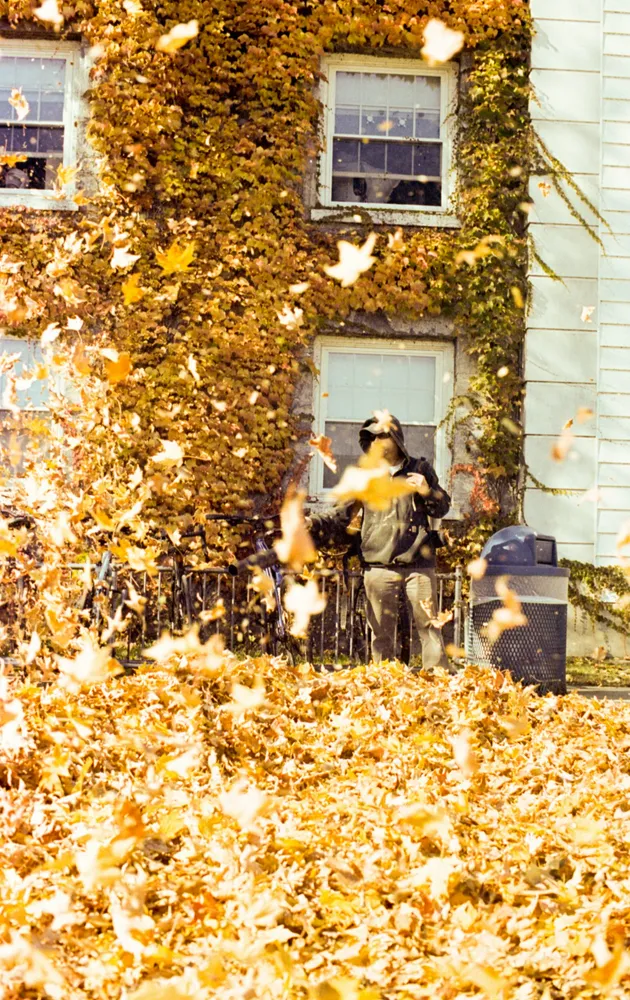
Lifestyle photography by Austin / Unsplash. The photograph illustrates a home setting; it does not identify a reviewed product.
A Saturday cleanup begins on the lawn but ends between shrubs, beside the steps, and around the legs of patio furniture. The widest rake in the shop may handle the first stretch while making every remaining corner awkward. Choosing a leaf rake is a question of access and control as much as collecting width. Start with the ground you actually clear and the way you move leaves afterward.
Our recommendations are based on practical household scenarios and current official manufacturer descriptions, without hands-on performance testing. We focus on choosing a suitable format rather than declaring one rake universally best. A modest rake that fits your posture and storage space can be more useful than a larger model bought for an imagined once-a-year cleanup.
In this guide
Separate leaf collection from soil work
Look at the shape of the head before comparing brands. A fan-style leaf rake is intended to gather leaves and similar loose material. A bow or landscape rake serves different ground-working jobs. Fiskars distinguishes leaf rakes from soil rakes in its official range, so do not choose a rigid soil-working tool simply because it appears tougher. Toughness alone does not establish that its head suits pulling a light layer of leaves across the lawn.
Inspect the actual debris as well. A dry layer on open grass presents a different task from tangled material around plants. Pick up larger sticks separately instead of treating every yard object as part of the same sweeping motion. If the job is routinely wet or compacted, consider changing the cleanup timing and technique before paying for a heavier rake. The purchase should solve the recurring collection task, not compensate for every difficult condition in the garden.
Choose head width around obstacles
An open rectangle of lawn is a plausible place for a wider head because you can make long unobstructed passes. A garden with closely planted beds may reward a smaller head that reaches where leaves collect. Measure the narrowest regular gap, such as between a shrub and a fence, and compare it with the rake’s overall width. If one tool cannot serve both areas comfortably, decide which area dominates before collecting several specialized rakes.
GARDENA’s combisystem lawn rake provides a current example of a leaf-and-clipping tool in a modular system. Corona’s fixed-tine leaf rake illustrates another conventional format. Their presence on the shortlist does not establish equal handling or interchangeable components. For a modular purchase, confirm that the exact head and handle are compatible and whether both are included. A low advertised head price can be misleading if you still need the required handle to begin work.
Assess the handle without relying on comfort claims
If possible, hold the rake in the position used for an ordinary short stroke. Can your hands move to different points without an awkward reach? Is the head controllable close to your feet as well as at full extension? A listing’s ergonomic label is not a personalized fit assessment. Consider handle length, grip shape, and the complete tool weight together. A light head on a poorly matched handle can still make repeated work inconvenient.
If ordering online, compare published overall measurements and read the return conditions before purchase. Do not infer handling from a product photograph taken at an angle. Check how the head joins the shaft and whether replacement components are available for the particular model. Avoid turning construction details into unsupported lifespan predictions: a material description is useful information, but it does not prove how many autumns your tool will last under your conditions.
Plan the pile and the transfer before you rake
Decide where the leaves need to finish before making the first pile. A composting area, collection bag, or local yard-waste arrangement creates different transfer needs. Gathering everything into one enormous pile at the far end of the yard may add carrying work. Several manageable piles near the collection route can be more practical. Check local collection rules for accepted materials and containers instead of assuming the same bagging method applies everywhere.
The rake head is mainly a gathering surface, not necessarily a shovel for a heavy load. Avoid judging value only by how much material you imagine lifting on its tines. If transferring is the slow part, an appropriate separate collection method may help more than replacing a serviceable rake. Break the work into short sessions when useful, change position, and keep the path free of hidden tools or bags while moving backward or turning.
Buy a manageable tool and give it a home
Storage can settle a close decision between two suitable formats. A broad head may snag other tools in a crowded shed, while a modular head has separate parts to keep together. Find a place that protects the head and leaves the handle out of the walking route. Check the manufacturer’s cleaning and storage guidance for the materials involved. Remove trapped debris after the job rather than returning the rake to storage with its tines packed full.
Spend first on the dimensions and construction that fit the regular work. Extras such as a detachable head are worth paying for only when they suit your existing tool system or storage limitation. The official shopping destinations below offer three ways to compare formats; check current availability and the exact included parts. A successful purchase is easy to retrieve, controllable around the plants you own, and straightforward to put away when the leaves stop falling.
Compare your options
| Option | Best fit | Tradeoff |
|---|---|---|
| Wide fan-style leaf rake | An open lawn with few obstacles and long collecting passes | A wider head can be awkward between planted borders and furniture |
| Narrower leaf rake | Smaller lawns and access around shrubs or narrow edges | More passes may be needed across a large open patch |
| Compatible modular rake head and handle | A household already using the matching manufacturer system | Compatibility and included components must be checked before comparing price |
Where to browse
Use these retailer collections to compare dimensions, materials, care instructions and current prices. These are ordinary retailer links unless an active affiliate arrangement is disclosed. We do not control availability, shipping or returns.
Questions before you buy
Can a soil rake replace a leaf rake?
It may move some loose leaves, but its rigid ground-working format serves a different task. Choose a tool intended for the surface and material you clear most often rather than expecting one head to be ideal for every garden job.
Should I buy the widest rake available?
Only if the working area, handling, and storage suit it. Measure the gaps where leaves accumulate; a smaller manageable head may serve a mixed lawn-and-border garden better.
Sources & further reading
- Fiskars official stick-tool range: leaf and soil rake roles
- GARDENA official combisystem lawn rake description
- Corona official fixed-tine leaf rake listing
Sources checked October 20, 2026. Practical suggestions reflect editorial judgment; always follow the instructions supplied with your own product.