Choose Patio Garden Pots by Drainage, Then Appearance
Plan a container garden around plant size, drainage, watering access and patio space before choosing pots, saucers and growing mix.
Our guidance is based on published information and household scenarios, rather than hands-on product testing. Some links may earn a commission when an affiliate relationship applies. Read our disclosure.
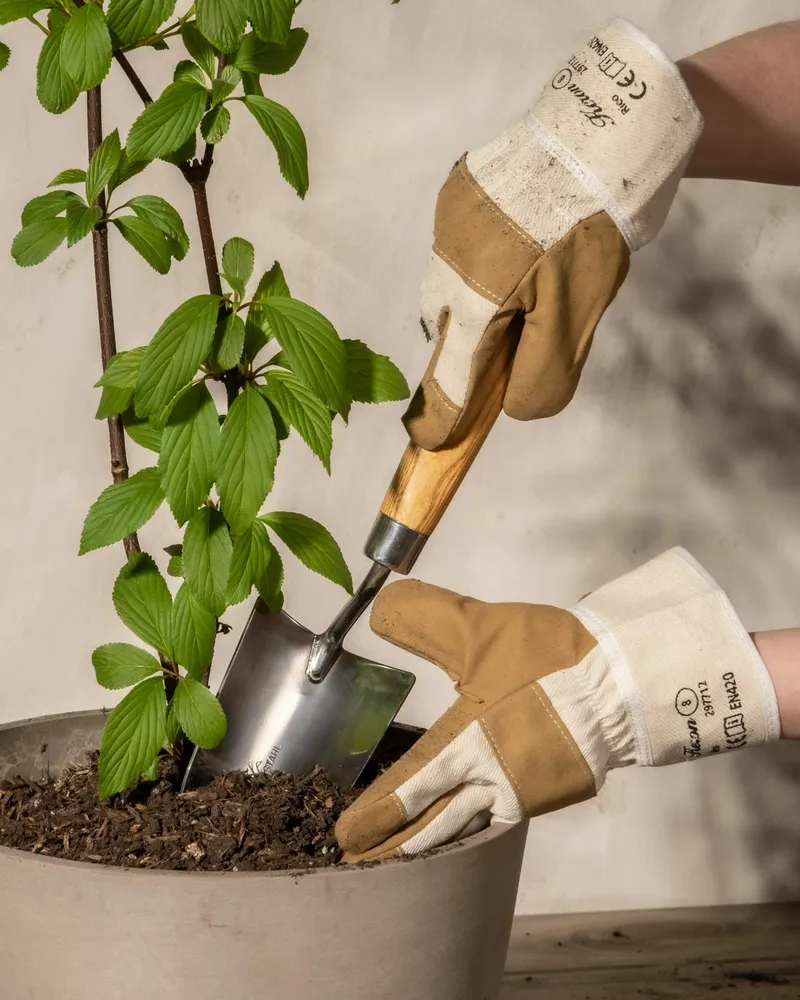
Lifestyle photography by feey / Unsplash. The photograph illustrates a home setting; it does not identify a reviewed product.
A patio herb garden often starts with the prettiest pot on a nursery shelf. The awkward questions arrive afterward: where does extra water go, can the container be moved once filled, and will the door still open? Imagine a small paved patio beside the kitchen, with herbs near the steps and a tomato plant planned for the sunny corner. Each container needs a practical job before its color becomes important.
In this guide
Choose the plant before the container
Write down the plants you intend to grow and consult their specific container requirements. University of Maryland Extension advises matching the container's depth and volume to the plant's eventual root system and top growth. A small nursery plant is a starting size, so the pot that accommodates it today may not serve the full growing season.
For the patio scenario, give the tomato and the herbs separate shopping briefs. Consider the variety you will actually buy, the available space and whether any support will be required. Do not buy a matching set of identical pots merely to simplify the display. The useful arrangement may combine different sizes while repeating a color or material for visual consistency.
Identify the drainage route before planting
Examine the actual container bottom or the manufacturer's photographs and instructions. A traditional outdoor growing pot needs an appropriate way for excess water to escape; a self-watering design follows its own reservoir and overflow arrangement. Maryland Extension specifically cautions that placing gravel or broken pottery beneath the growing mix does not improve drainage. Choose a functioning container instead of trying to correct an unsuitable one with filler.
Decide where drainage water can go without creating a problem for the home or neighboring space. A saucer can collect water, but it also adds an inspection and emptying task. If you use an outer decorative container, make the inner growing pot accessible. A heavy pot fitted tightly inside another vessel can make the watering routine considerably harder than expected.
Compare materials through the household routine
Consider the pot's empty weight, intended outdoor use and care directions, then imagine it filled with damp growing mix. Do not assume that a handle or raised rim means a container can be carried safely when planted. If moving is important, review suitable supports or caddies and their stated limits before choosing a large vessel.
Porous containers and less porous containers can require different attention to watering, as Maryland Extension explains. Treat that as a reason to monitor the actual plant and conditions rather than follow one fixed schedule for every pot. If you will be away regularly, investigate an appropriately documented self-watering system and learn its refill routine before relying on it during a trip.
Plan the patio while the pots are still empty
Mark each footprint and open the kitchen door through its full movement. Leave room to carry groceries, reach the hose or watering can and tend plants without stepping over another container. A pot beside a step can look neatly tucked away while still interfering with the route everyone uses at dinner time.
Consider the planter's position after the plant grows wider, including any support structure. Check the sunlight needed by the particular crop and observe the patio at different times rather than judging one bright photograph. If the space is a balcony or raised deck, resolve structural and building requirements with the appropriate responsible party before installing heavy filled containers.
Buy the growing mix as a deliberate component
Choose a growing medium intended for your container and plants, following appropriate extension guidance and the product's instructions. Calculate the volume from the container's usable planting space instead of guessing from its outside height. A decorative tall base or an integrated reservoir can change how much mix a planter actually holds.
Include the mix, suitable supports and any necessary saucer in the purchase comparison. A low pot price may represent only part of a working arrangement. Keep fertilizer choices separate until you understand what the mix contains and what the crop needs. Buying several amendments before reading the labels can add expense and leave you uncertain about what has already been applied.
Start with a complete manageable planting
For a first patio setup, finish the intended tomato container and a modest herb arrangement before ordering a row of additional pots. Check the pieces on arrival, including drainage components and any reservoir instructions. Keep packaging until you have verified the order and the seller's return conditions, then assemble the containers as directed before adding growing mix.
After planting, keep a simple note of which container needs attention and whether its position remains practical. A pot that blocks the watering route should be moved appropriately before the plant makes that harder. Future purchases can then address a demonstrated gap: another suitably sized herb container, a compatible saucer or a better-positioned support. Avoid expanding the collection simply to fill the remaining pavement.
Compare your options
| Option | Best fit | Tradeoff |
|---|---|---|
| Traditional pot with drainage openings | A visible straightforward watering arrangement | Drainage water and surface placement need planning |
| Self-watering planter | Gardeners willing to follow a reservoir-based routine | Refill and overflow instructions must be understood |
| Growing pot inside a decorative container | Keeping an existing outer pot in use | The inner pot must remain accessible |
Where to browse
Use these retailer collections to compare dimensions, materials, care instructions and current prices. These are ordinary retailer links unless an active affiliate arrangement is disclosed. We do not control availability, shipping or returns.
Questions before you buy
Should I put gravel in the bottom for drainage?
University of Maryland Extension advises against using gravel as a drainage improvement. Start with an appropriate container, drainage arrangement and growing medium instead.
Can I use the same pot size for every vegetable?
Choose according to the specific crop and variety. Consider root space and mature growth rather than the size of the plant at the nursery.
Sources & further reading
Sources checked October 20, 2026. Practical suggestions reflect editorial judgment; always follow the instructions supplied with your own product.