Garden Tool Storage That Fits a Shared Garage
Plan garden tool storage around clean dry tools, safe access, suitable mounting and a realistic return routine in a shared household garage.
Our guidance is based on published information and household scenarios, rather than hands-on product testing. Some links may earn a commission when an affiliate relationship applies. Read our disclosure.
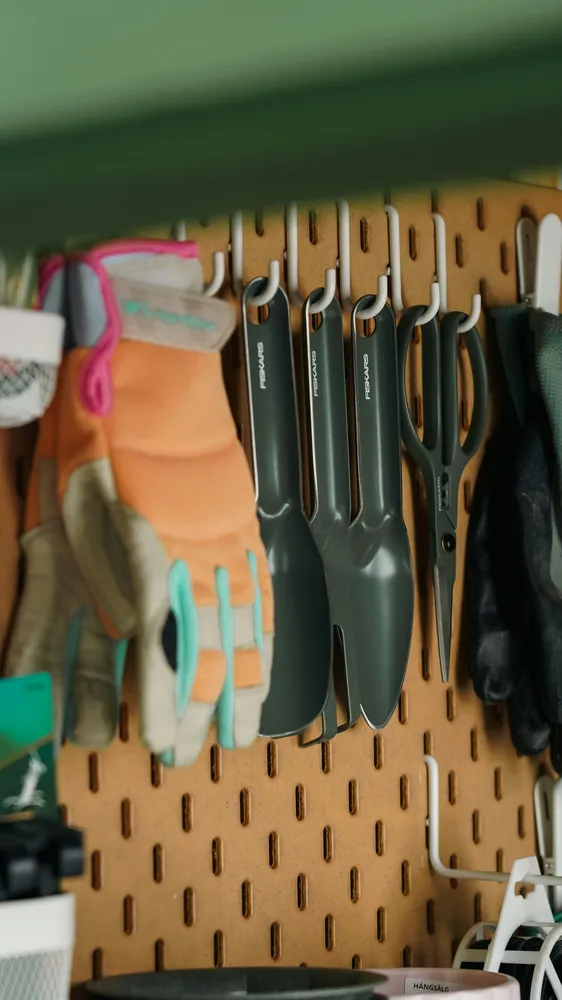
Lifestyle photography by Kailun Zhang / Unsplash. The photograph illustrates a home setting; it does not identify a reviewed product.
A trowel on the potting bench, a rake behind the bicycles and pruning tools somewhere near the paint cans: a shared garage can make a short garden task begin with a search. Buying a large organizer is tempting, but first follow the tools through an ordinary afternoon. Where do muddy tools arrive, where can they be cleaned and dried, and how do they return to a secure place without blocking everyone else's belongings?
In this guide
- Inventory tools by how they are used
- Put the cleaning step before the final shelf
- Choose mounting for the wall you actually have
- Use portable storage for the tools that travel together
- Keep the shared garage usable after gardening
- Buy the smallest system that completes the routine
- Compare your options
- Where to browse
Inventory tools by how they are used
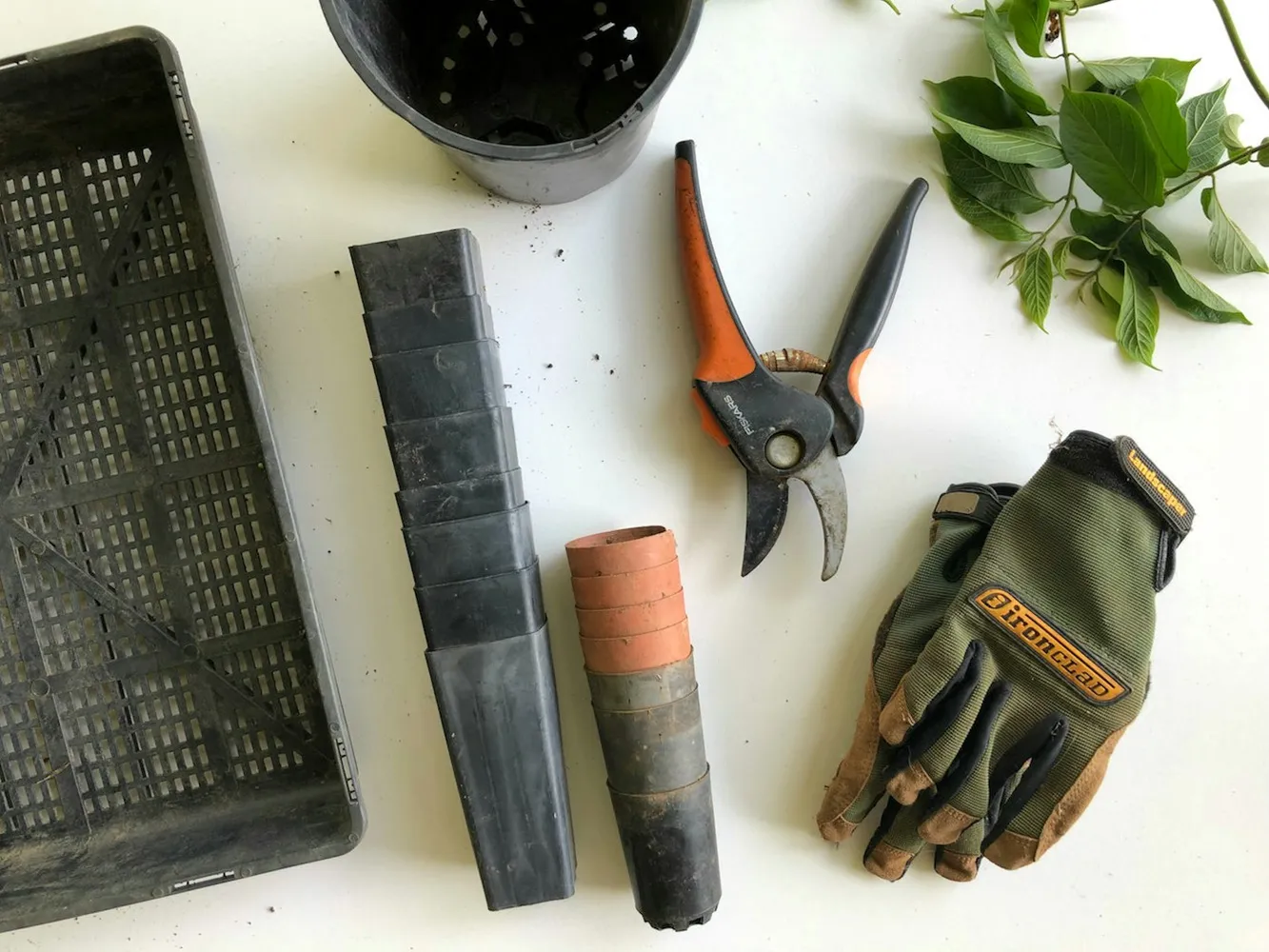
Lay out only the garden tools you own and identify their regular tasks. Separate frequently used hand tools from long-handled equipment and items brought out occasionally. Remove broken or unsuitable tools from the active arrangement for appropriate repair or disposal. Storage should represent the current collection, not an imagined future collection that requires a much larger cabinet.
Measure the longest tools, handles and awkward projections before choosing an organizer. A rack advertised for garden equipment may not accommodate your particular shovel or rake head. Think about how you will remove a tool without lifting several others. A clearly assigned place for a modest collection can be more useful than a densely packed rack with impressive capacity.
Put the cleaning step before the final shelf
University of Minnesota Extension provides guidance on cleaning and disinfecting gardening tools and recommends dry storage away from children and vulnerable adults. Use that guidance alongside the tool manufacturer's care directions. Cleaning, disinfecting, sharpening and lubrication are different tasks; do not invent one treatment for every tool simply because they share a storage location.
Identify a suitable place for removing soil and carrying out appropriate care, then let the tools dry as directed before storage. A closed tote is convenient for carrying hand tools, but it should not become the destination for wet equipment. If the cleaning step is awkward, improve that workflow first instead of expecting a new cabinet to solve the maintenance problem.
Choose mounting for the wall you actually have
Inspect the proposed location and determine whether appropriate mounting is permitted. Follow the rack manufacturer's instructions for fasteners, suitable wall construction and stated loads. A hook that holds an empty tool in a photo does not establish that an arbitrary fixing will work in your garage. Ask for qualified help if the wall or installation requirements are unclear.
Leave sufficient room around the stored tools for safe retrieval. Keep projecting heads and sharp parts away from paths and follow any tool-specific storage precautions. Consider the garage door's movement, car clearance and access to household controls. The ideal-looking wall may already serve several functions that become obvious only when the garage is in normal use.
Use portable storage for the tools that travel together
A modest carrier can suit the hand tools used for the same task, such as potting containers beside the back steps. Check its dimensions, handle arrangement and intended load. Put only the useful tools in it, and give the carrier a defined dry home afterward. Filling every pocket can make a simple garden trip unnecessarily heavy.
For cutting tools, follow the manufacturer's directions for closing, locking or protecting the working parts. Do not drop exposed blades into a shared bag where someone must search by hand. Keep cleaning products and maintenance supplies according to their labels, separate from casual household storage. A carrier is an access solution, so the contents should remain orderly enough to identify without rummaging.
Keep the shared garage usable after gardening
Walk through the proposed setup while imagining bicycles being moved and groceries coming from the car. An open cabinet door or a tool hanging near the floor can interfere with those ordinary activities. Check the storage footprint while in use as well as when closed. If a potting bench is included, consider where its work will spread.
Give other household members an understandable return arrangement. Labels can help when tools look similar, but a clear layout often matters more than a large labeling system. Keep shared garden items together without letting unrelated objects gradually occupy their spaces. The easier the return step is, the less likely a tool is to remain leaning against a bicycle after the task ends.
Buy the smallest system that completes the routine
Compare a suitable rack, existing shelf and portable carrier against the actual inventory. Include required approved mounting hardware, delivery and any necessary assembly in the cost. Do not purchase a complete potting station if the only missing function is a secure home for a few hand tools. A large workstation needs both space and an ongoing purpose.
Once the first storage change is installed, complete a garden task and return every tool. Notice whether the drying step, rack spacing and carrier location work together. Add another component only for a specific remaining problem. A good arrangement makes it easy to find a cared-for tool and put it away again while preserving the garage space needed for the rest of household life.
Compare your options
| Option | Best fit | Tradeoff |
|---|---|---|
| Appropriately mounted tool rack | Long-handled tools with a documented mounting arrangement | Wall construction and retrieval clearance matter |
| Portable hand-tool carrier | A small collection used together | Wet or exposed sharp tools need proper care first |
| Dry cabinet or existing shelf | Keeping suitable items in a defined home | Internal layout and access must suit the tools |
Where to browse
Use these retailer collections to compare dimensions, materials, care instructions and current prices. These are ordinary retailer links unless an active affiliate arrangement is disclosed. We do not control availability, shipping or returns.
Questions before you buy
Can wet tools go straight into a closed tote?
Follow their care directions and let them dry appropriately before final storage. A carrier should not replace the cleaning and drying steps.
Should I buy a rack with the most slots?
Measure the tools and retrieval space instead. Extra slots provide little benefit if tool heads overlap or the household cannot safely reach the equipment.
Sources & further reading
Sources checked October 20, 2026. Practical suggestions reflect editorial judgment; always follow the instructions supplied with your own product.